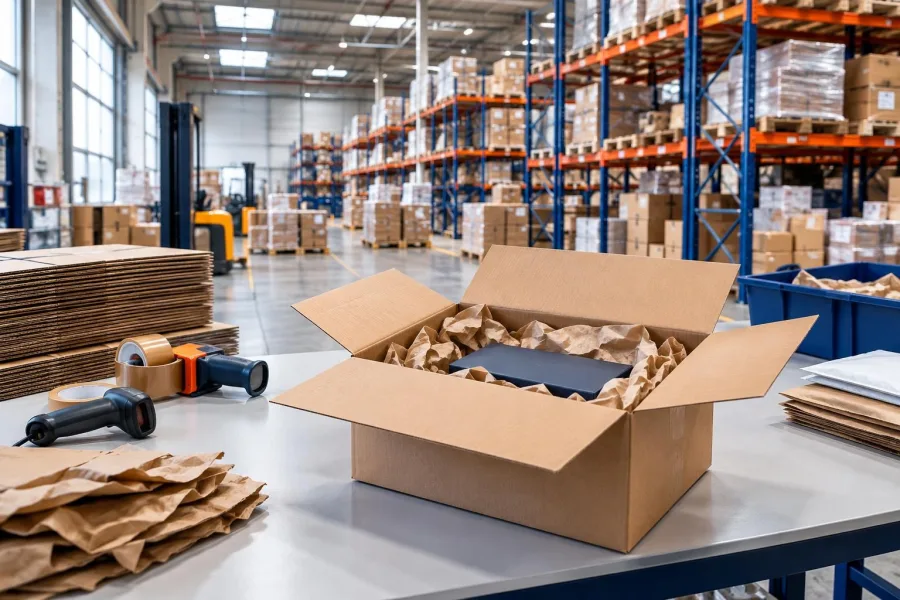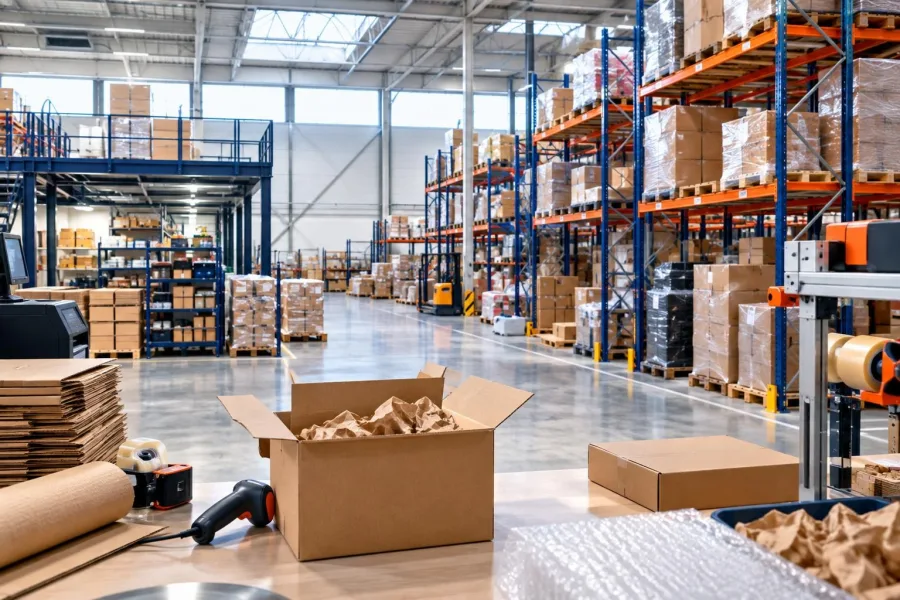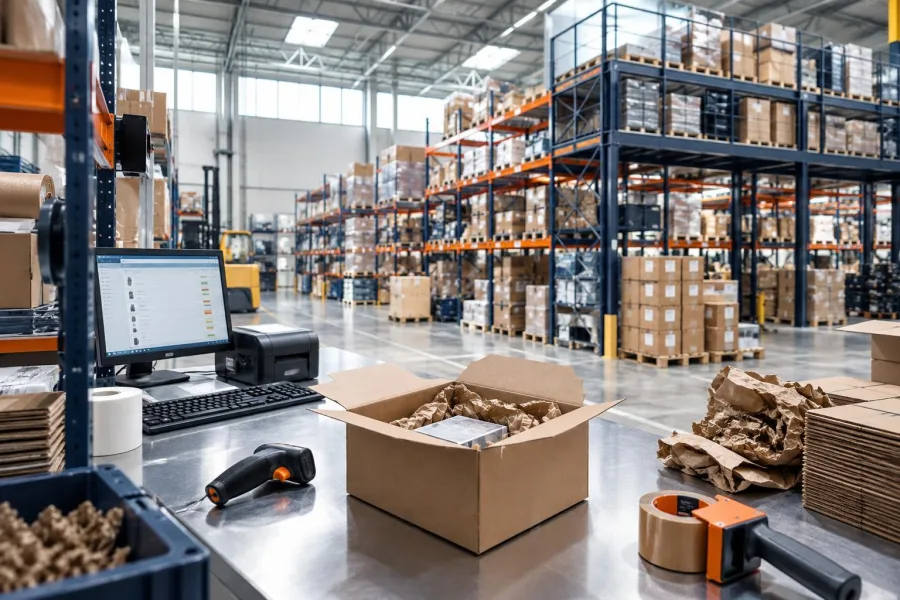
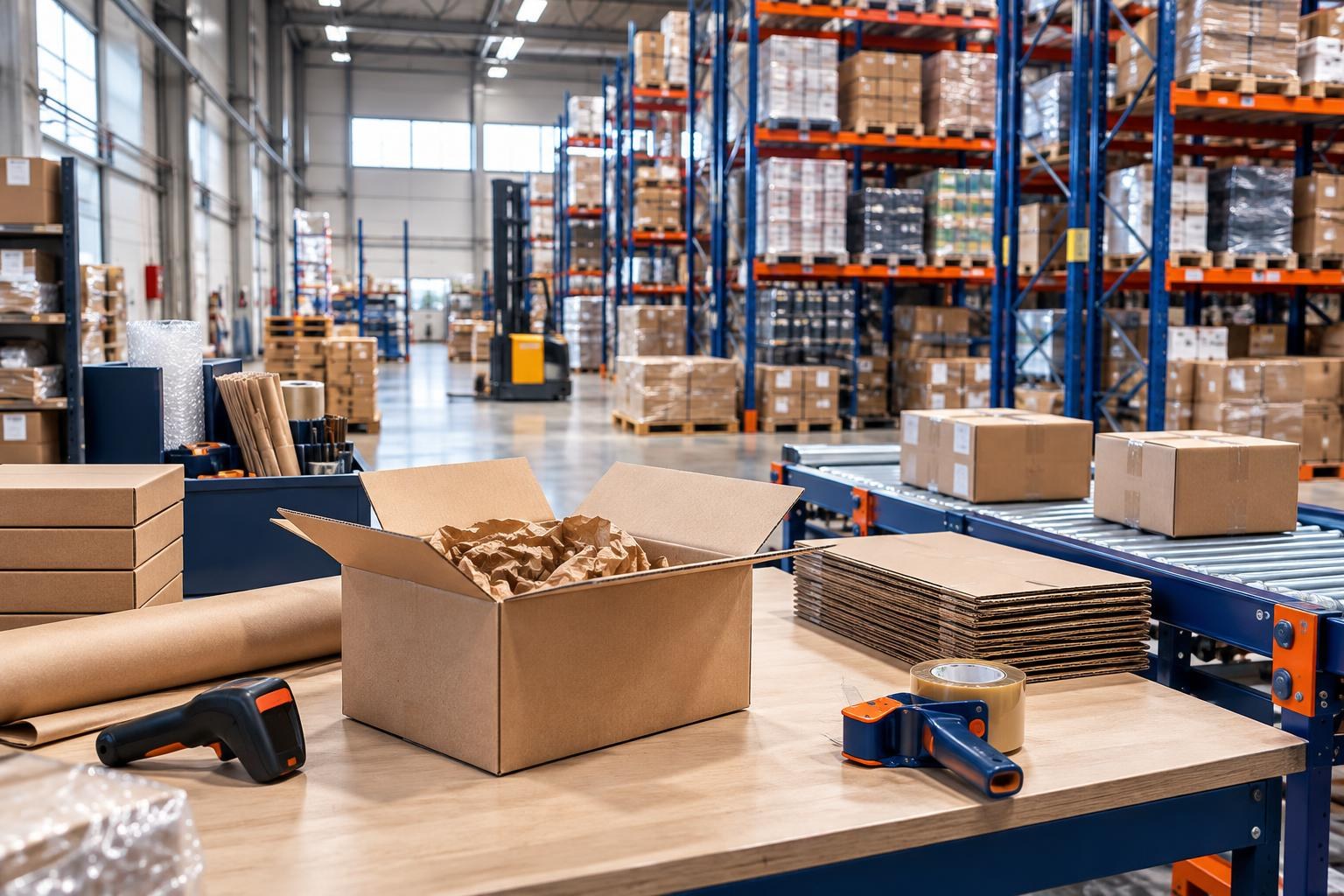
Packing parcels is one of the most underestimated processes in e-commerce. Yet this is exactly where most complaints, damage and unhappy customers originate. Most problems can be prevented with the right materials, a good procedure and attention to detail.
1. The wrong box size
A box that is too big means two things: the goods move around during transport and you pay unnecessarily much for shipping. Carriers often charge by volumetric weight, so “shipping air” can cost you a lot of money.
What to do about it?
- use several box sizes to suit your product range,
- do not squeeze small goods into large universal boxes,
- do not use deformed boxes – they reduce the strength of the package.
🟦 Fulnio tip: For most e-shops, 6–10 box sizes are ideal. Fewer causes waste, more complicates the process.
2. Insufficient or unsuitable filling
Filling material holds the goods in place inside the box. If it does not do that properly, damage is only a matter of time. Common mistakes are:
- too little filling,
- using cheap or unsuitable materials,
- putting filling only on top – that is not enough.
The best fillers by type of goods:
- fragile goods: cardboard inserts, sturdy bubble wrap, paper honeycomb,
- cosmetics / electronics: air cushions + paper,
- clothing: needs no filling but needs protection from moisture.
3. Saving on tape
Cheap tape = a cheap experience. In higher humidity, cold or longer storage it can come unstuck and the parcel opens. One such parcel is enough to get a complaint.
Key rules:
- use tape 48–50 mm wide,
- high-tack tape is best (hot-melt or solvent),
- the cardboard must be dry and clean before taping.
4. Missing “Fragile” or “This side up” labels
Couriers handle thousands of parcels every day. If the goods are not labelled, you are relying purely on luck.
Always use labels for:
- glass, ceramics, decorations,
- electronics,
- liquids that must not be turned upside down.
Remember: a label does not mean the parcel cannot be damaged – but it significantly reduces the risk and also protects you when claiming with the carrier.
5. Poor packing of liquids and cosmetics
Liquids are one of the most common sources of disasters in logistics. A single leak ruins not only the product but the whole parcel.
The most common mistakes:
- bottles are not wrapped individually,
- goods are not protected against leaks,
- unsuitable fillers are used that soak up liquid.
Recommendations:
- use resealable bags for each item,
- wrap and secure each bottle separately,
- heavy items at the bottom, light items on top.
6. Chaotic packing with no system
Packing without a system leads to mistakes: forgotten products, mixed-up colours, wrong sizes, damaged goods and a slower process.
Every warehouse should have:
- a clear packing zone,
- packing materials ready,
- a checkpoint (verifying the order is correct),
- standard packing procedures.
At Fulnio we use prepared packing protocols, which keeps packing errors to a minimum.
7. Using damaged or reused boxes
Recycling is great. But used or damaged boxes lose their strength and can deform during transport.
Using such boxes leads to:
- product damage,
- a poor impression on the customer,
- less protection against moisture,
- worse stacking in delivery vans.
If you reuse boxes, use only undamaged, sturdy, clean boxes.
8. Skipping the “shake test”
One of the most important yet simplest checks before shipping. After packing, simply shake the parcel. If anything moves, the goods are not properly secured.
This test can literally save hundreds of euros in complaints.
A final tip: Packing is marketing. The customer’s first physical contact with your brand is the parcel – if it is clean, sturdy and neat, the customer immediately gets a better impression.